Commercial Excavation Services in Wenatchee, WA
Site Work That Keeps Your Doors Open While the Dirt Moves
A closed business does not recover the revenue lost to a poorly sequenced excavation. Gates Brothers Excavation
delivers commercial excavation for developers, general contractors, and property owners in Wenatchee, WA, East Wenatchee, WA, Chelan, Chelan County, and Douglas County. This page covers building pads, parking and drive aisle subgrade, mass excavation, phased digs on occupied properties, engineered compaction, and the staged access that keeps deliveries, customers, and construction traffic separated.
Owner Isaac Gates has been moving commercial dirt since founding the operation in 2017, backed by 15+ years in this terrain, and he coordinates directly with project managers, superintendents, and engineers rather than routing questions through an office. Schedules are committed to and updated, subgrade is compacted to the specification on the drawings, and testing is accommodated without argument. Submit your plans and phasing requirements through our estimate request form to get a scoped number back.
Commercial Excavation We Handle
Commercial Building Pad Construction
Structural pads carry the entire building, so they are cut, moisture conditioned, and compacted to the geotechnical report rather than to feel. Overbuild dimensions extend past the footprint, giving forming crews room and keeping edges from failing under equipment loads.
Parking and Drive Aisle Subgrade
Pavement fails from below long before it fails from traffic. Subgrade is rolled and probed, soft areas are undercut and replaced, and base rock is placed at consistent thickness so the finished surface holds line and drains toward the inlets as designed.
Mass Excavation and Haul-Off
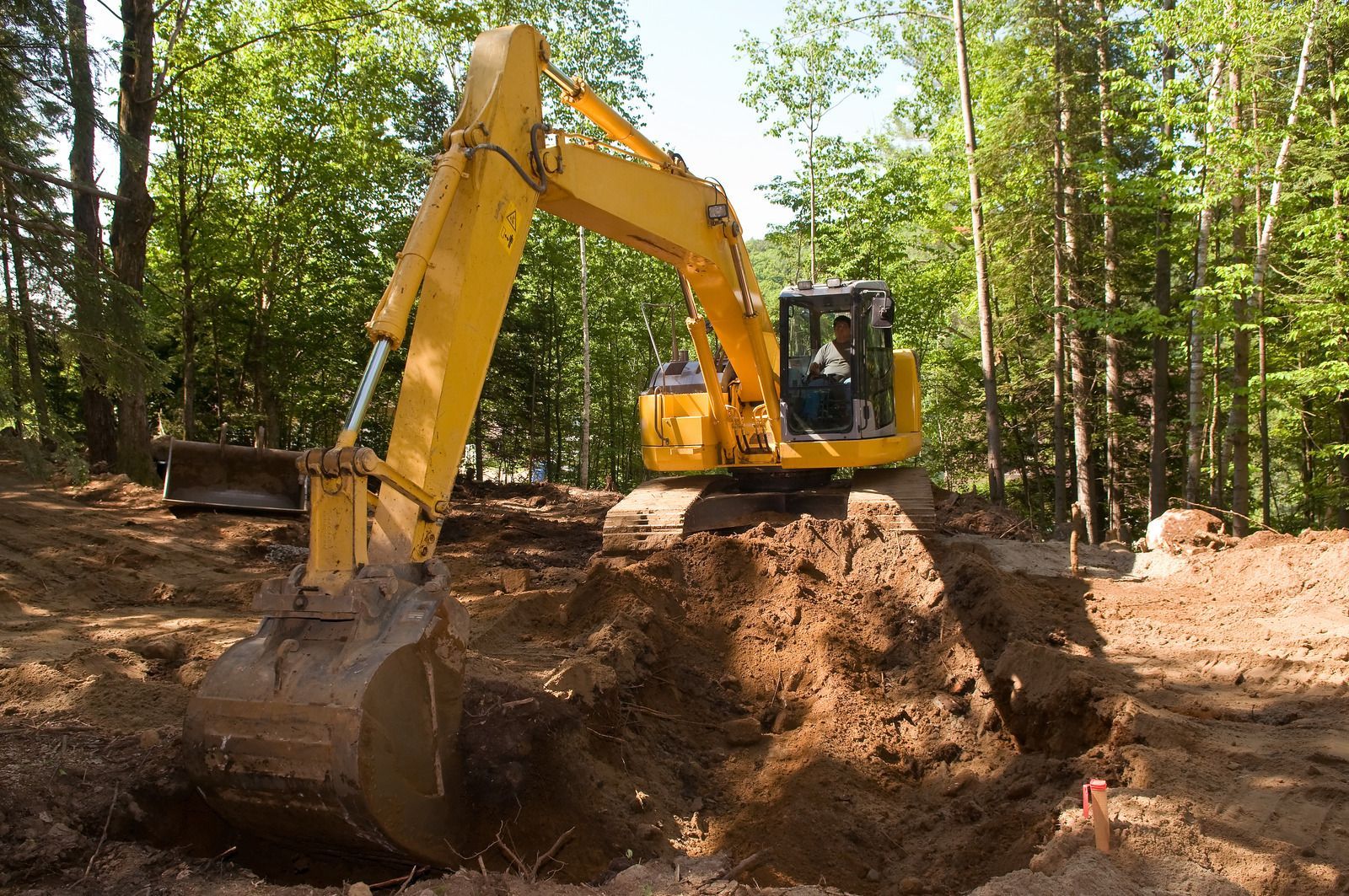
Large-volume cuts demand production equipment, disciplined truck cycles, and constant grade checking. Loaders and excavators feed a haul fleet running a planned route, keeping thousands of yards moving on a predictable daily rate rather than in unmeasured bursts.
Phased Digs on Operating Properties
Splitting a site into stages lets one section be torn up while the rest stays open. Barricades, temporary surfacing, and defined work windows keep entrances usable, and each phase is closed out before the next section is opened.
Compaction to Engineered Specification
Lift thickness, moisture content, and equipment passes are controlled to hit the density the geotechnical engineer requires. Testing agencies are scheduled around our production, and failing areas are reworked immediately instead of being buried under the following lift.
Staged Access and Haul Routing
Construction traffic and public traffic do not mix well on an occupied property. Dedicated entrances, control of mud tracked onto public streets, flagging at conflict points, and truck routes kept clear of customer parking prevent the site from becoming a liability.
How Professional Excavation Keeps Projects Moving
Revenue That Continues During Construction
Tenants keep trading, customers keep parking, and deliveries keep arriving because the site is divided into stages rather than shut down wholesale. The project advances without the owner absorbing weeks of lost sales just to make the schedule possible.
A Schedule Other Trades Can Build Against
Underground, concrete, and paving crews all mobilize off the dirt work below them. Committed dates that actually hold let a superintendent load the calendar with confidence instead of rescheduling three separate subcontractors every time the earthwork slips another week.
Subgrade That Passes Testing the First Time
Failed density tests stop concrete pours and cost days on the calendar. Building lifts to the specification while the machine is still on site means the testing agency confirms what was already done properly rather than triggering rework across the pad.
One Accountable Party for the Dirt Package
Dividing clearing, mass excavation, and grading between separate contractors creates gaps nobody owns. Consolidating earthwork under a single accountable operation eliminates finger pointing when an elevation comes in wrong and gives the project team exactly one number to call.
Fewer Change Orders From Unknown Conditions
Buried foundations, contaminated fill, groundwater, and unexpected rock all arrive as surprises nobody planned for. Identifying them early and pricing the solutions before they stop production keeps the budget in known territory instead of absorbing emergency costs late in the schedule.
Pavement and Slabs That Last Their Design Life
Cracked lots and settled slabs almost always trace back to subgrade that nobody verified. Properly prepared ground beneath asphalt and concrete protects the owner from repaving and resurfacing costs that arrive years earlier than any capital plan ever expected.
Ground Prepared Well Is the Cheapest Part of the Project
Owners rarely see the earthwork once the building is standing, yet every settled slab, ponding lot, and cracked drive aisle points straight back to it, which is why Gates Brothers Excavation treats commercial site preparation in Wenatchee, WA as a long-term investment instead of a line item to shave. You get an owner coordinating directly with your team, compaction built to the engineer's specification, phasing that protects daily operations, and documentation ready for closeout. Bring us in during planning rather than after a schedule is already at risk. Send your civil drawings and phasing constraints through our estimate request form for a scoped, realistic proposal.
FAQs - Frequently Asked Questions
How is a business kept operating during excavation?
The site is broken into phases so only part of the property is under construction at once. Temporary access, barricades, and defined work windows preserve entrances, parking, and delivery routes while each stage is completed and then reopened to traffic.
What is mass excavation?
Mass excavation is the bulk removal of large soil volumes to reach a design elevation across a broad area. It relies on heavy production equipment and continuous hauling cycles rather than the precision digging used for footings or narrow trenches.
How is compaction verified on a commercial site?
An independent testing agency performs field density tests against the geotechnical report at specified intervals and lift depths. Gates Brothers Excavation has scheduled testing around production in Wenatchee, WA for 15+ years, so results arrive before the next lift covers the work.
Who coordinates the earthwork with the general contractor?
Our owner handles it directly, attending coordination meetings, reviewing grading plans, and confirming elevations with the superintendent and civil engineer. Direct contact removes the delay that comes from relaying technical questions through office staff who were never on the site.
What does a phased excavation schedule look like?
Each phase defines a work area, a duration, an access plan, and a completion condition before the next area opens. Sequencing typically starts with the parts of the property carrying the least operational impact and works toward the most disruptive.
How are haul routes selected on a commercial property?
Routes favor the shortest path between the cut and the exit that avoids customer traffic, soft ground, and pavement not rated for loaded trucks. Tracking pads and regular street sweeping control the mud and dust where the route meets public roads.
What documentation should earthwork produce?
Expect compaction test results, quantity records for imported and exported material, and grade verification against the approved civil plan. Gates Brothers Excavation keeps Wenatchee, WA projects documented so that closeout and engineer sign-off do not stall at the end.
When should excavation be scheduled in a commercial build?
Earthwork should be locked in as soon as the civil drawings are approved and the permits are moving. Dirt work drives every date behind it, and late mobilization compresses concrete, underground utilities, and paving into a window that was never realistic.