Sewer Line Installation Services in Wenatchee, WA
Sewer Lines That Hold Their Grade for Good
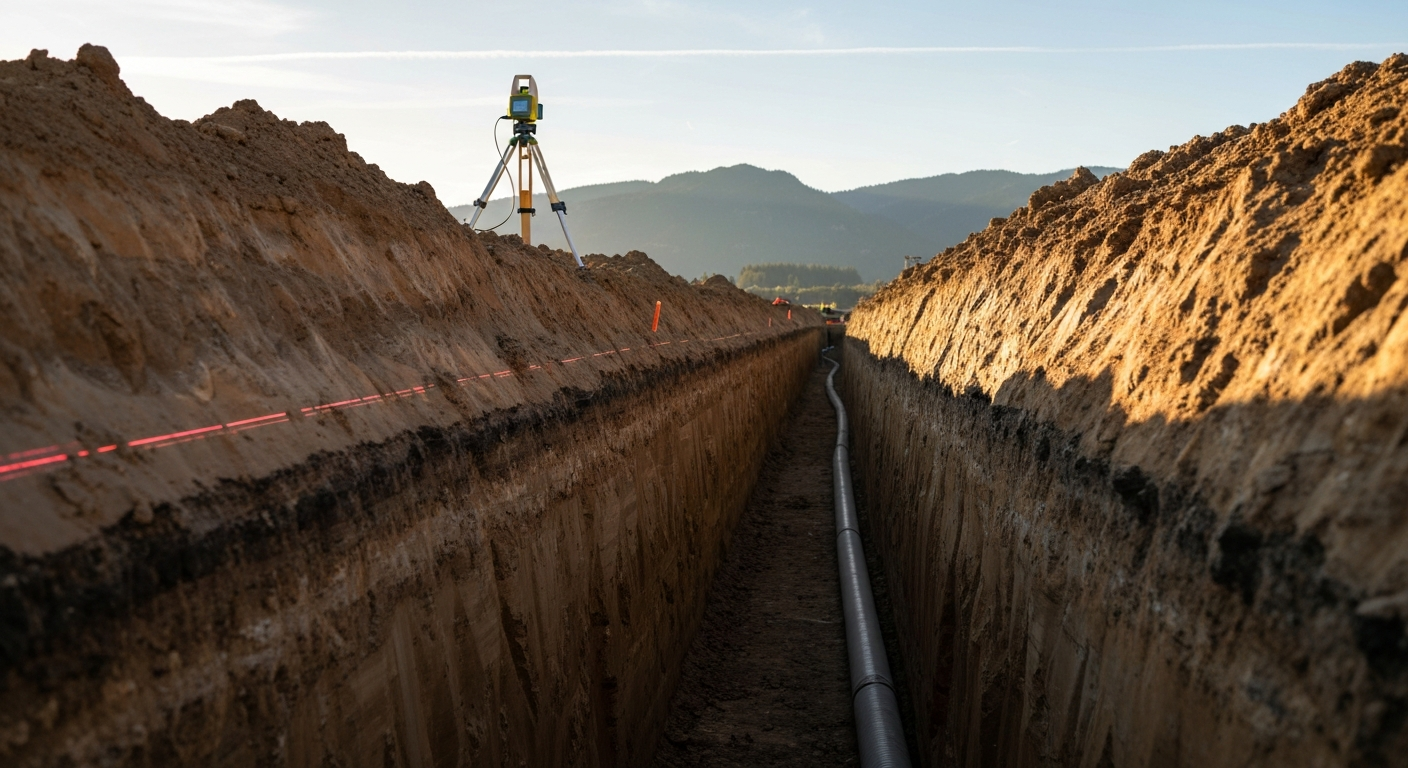
Slope is the whole job. A sewer lateral moves waste by gravity alone, so a run that loses fall in one section will back up no matter how good the pipe is, and Gates Brothers Excavation treats sewer line installation as a grade problem before anything else. We dig and set laterals for homes, shops, and septic systems in Wenatchee, WA, East Wenatchee, WA, Cashmere, and across Douglas County.
Owner Isaac Gates founded our crew in 2017 and brings 15+ years behind the controls, reading the grade himself instead of sending someone else out. Licensed septic installation work sits alongside our sewer trenching, so a lateral heading to a tank gets the same attention as one heading to a main. We keep the site orderly, explain what we found, and hold 10% off for veterans and first responders. Send your project through our estimate request form.
Sewer Lines We Install
Building Laterals to the Municipal Main
Running from the house stub out to the connection at the main is the backbone of the system. Depth at both ends, the distance between them and the fall available across that span decide the route long before a machine starts digging.
Septic Tank and Drainfield Lines
Off the municipal system, a lateral runs into the tank and separate lines carry effluent out to the drainfield, each with its own grade requirement. We handle the licensed septic installation side, so tank and pipe get set as one system.
Consistent Fall From Fixture to Connection
Too little slope leaves solids behind, too much lets water outrun them, and both end in blockages. Grade gets shot and checked as the trench bottom is cut, so the pipe drops at an even rate the entire way down.
Cleanout Placement and Future Access
Access points put at the right spots turn a future blockage into a quick job instead of an excavation. Cleanouts go near the building, at long runs and at direction changes, then finish at grade where a camera or snake can reach.
Bedding and Haunching That Holds Grade
Pipe laid on uneven rock will find its own level over time, and that is how bellies form. Bedding material is shaped under and around the haunches so the barrel is supported along its full length, not just at scattered contact points.
Driveway Crossings by Bore or Open Cut
Certain crossings are better bored beneath, leaving the surface untouched, while others are faster and cheaper to open cut and rebuild. Depth, distance, surface type and what sits underneath decide which approach actually makes sense on a given property.
Why Proper Installation Prevents Future Sewer Problems
Flow That Keeps Moving Without Backups
Waste that keeps moving does not build up, and a lateral cut at consistent fall carries solids the whole distance. That means no slow drains, no gurgling fixtures and no standing water in the lowest bathroom in the house.
No Sag in the Surface, No Sag in the Pipe
Settled backfill drags the pipe down with it, which is how a straight run turns into a low spot that catches solids. Filling in lifts and compacting as the trench comes up protects both the surface above and the grade below.
Blockages Cleared Without Digging
Cleanouts placed where they are actually useful mean a plumber can clear a line from the surface. Instead of paying for exploratory digging during an active backup, you get an access point already waiting at the spot that matters.
A Driveway That Survives the Project
Deciding early whether to bore under a driveway or cut and rebuild it saves you from an unpleasant surprise at the end. Either way the finished surface is planned into the job rather than handled as a costly afterthought.
Odor and Overflow Kept Out of the Yard
Leaks and slow spots in a buried lateral eventually show up above ground as wet patches, smell, and soft soil. A sound run with tight joints keeps what belongs in the pipe inside it, which protects your yard and your well.
A Lateral You Will Not Be Nursing Along
Setting depth, grade, bedding, and connection right the first time is what separates a lateral you forget about from one that needs attention every couple of years. The value shows up as silence: no callbacks, no camera visits, no repeat digging.
Drainage You Stop Thinking About the Day It Is Buried
Every sewer problem people remember started as a few inches of lost fall nobody checked. Gates Brothers Excavation puts the effort at that stage instead, shooting grade, shaping bedding and compacting backfill on laterals across Wenatchee, WA so the line still runs the same way years from now as it did the week it went in. Whether you are connecting a new build, replacing a failing run or setting a line to a septic tank, there is no rush to decide today. When the timing suits you, send the details through our estimate request form or start with our contact page.
FAQs - Frequently Asked Questions
What slope does a sewer lateral need?
A lateral needs enough fall to carry solids without letting liquid run ahead of them, and that rate is set by pipe diameter. The number matters less than holding it evenly, since a single flat section undoes an otherwise good run.
What causes a belly in a sewer line?
Bellies form when the pipe loses support underneath, usually from poor bedding, uncompacted backfill or settlement in disturbed soil. Water then pools in the low spot, solids collect there, and the line clogs repeatedly in the same place year after year.
How many cleanouts does a sewer lateral need?
Enough that no section is unreachable, which usually means one near the building and more at long runs or bends. Gates Brothers Excavation sets them where access will be needed on properties around Wenatchee, WA, not just where they are easy to install.
Do sewer lines need to be a certain distance from a water line?
Separation between potable water and sewer is required both horizontally and vertically, with water typically running above. Keeping that distance prevents cross-contamination if either line develops a leak underground, and it is among the first things an inspector checks.
What pipe is used for a new sewer lateral?
Solid-wall PVC in the appropriate rating is standard for new laterals because it holds shape, resists root intrusion and takes gasketed joints. Old clay, cast iron and thin corrugated pipe are the materials most often being replaced today.
Do tree roots damage a new sewer line?
Roots exploit joints and cracks rather than punching through sound pipe, so modern gasketed material with tight connections is far more resistant. Gates Brothers Excavation also routes new laterals around established trees where that is possible on lots in Wenatchee, WA.
How is a new lateral connected to the municipal main?
Connection at the main is made with an approved saddle or wye tap, and it normally happens with the utility notified and an inspection scheduled. The trench stays open at that point until that connection has been reviewed and approved.
Should an old sewer lateral be replaced when remodeling?
If the existing lateral is clay, cast iron or already prone to blockages, replacing it during a remodel is far less disruptive than doing it later. Landscaping and hardscape are usually already disturbed, which removes most of the restoration cost.