Driveway Excavation and Grading Services in Wenatchee, WA
A New Driveway Built From the Subgrade Up
What does a driveway actually have to survive before it earns its cost? Loaded concrete trucks, spring runoff, snowplows, and a decade of daily use. Gates Brothers Excavation builds new driveways for properties in Wenatchee, WA, East Wenatchee, WA, Leavenworth, and across the Wenatchee Valley. This page covers new driveway excavation and grading from the first cut through the subgrade to the finished driving surface.
Most driveway failures trace back to what nobody can see, which is why we spend the time on subgrade and drainage before a single load of rock arrives. Isaac Gates has been building access on valley and foothill ground for 15+ years, running the equipment personally on jobs since 2017 and telling you straight what a route will and will not do. Veterans and first responders receive 10% off. Start with our estimate request form and we will lay out the route options.
Driveways We Excavate and Grade
Driveway Path Cutting and Excavation
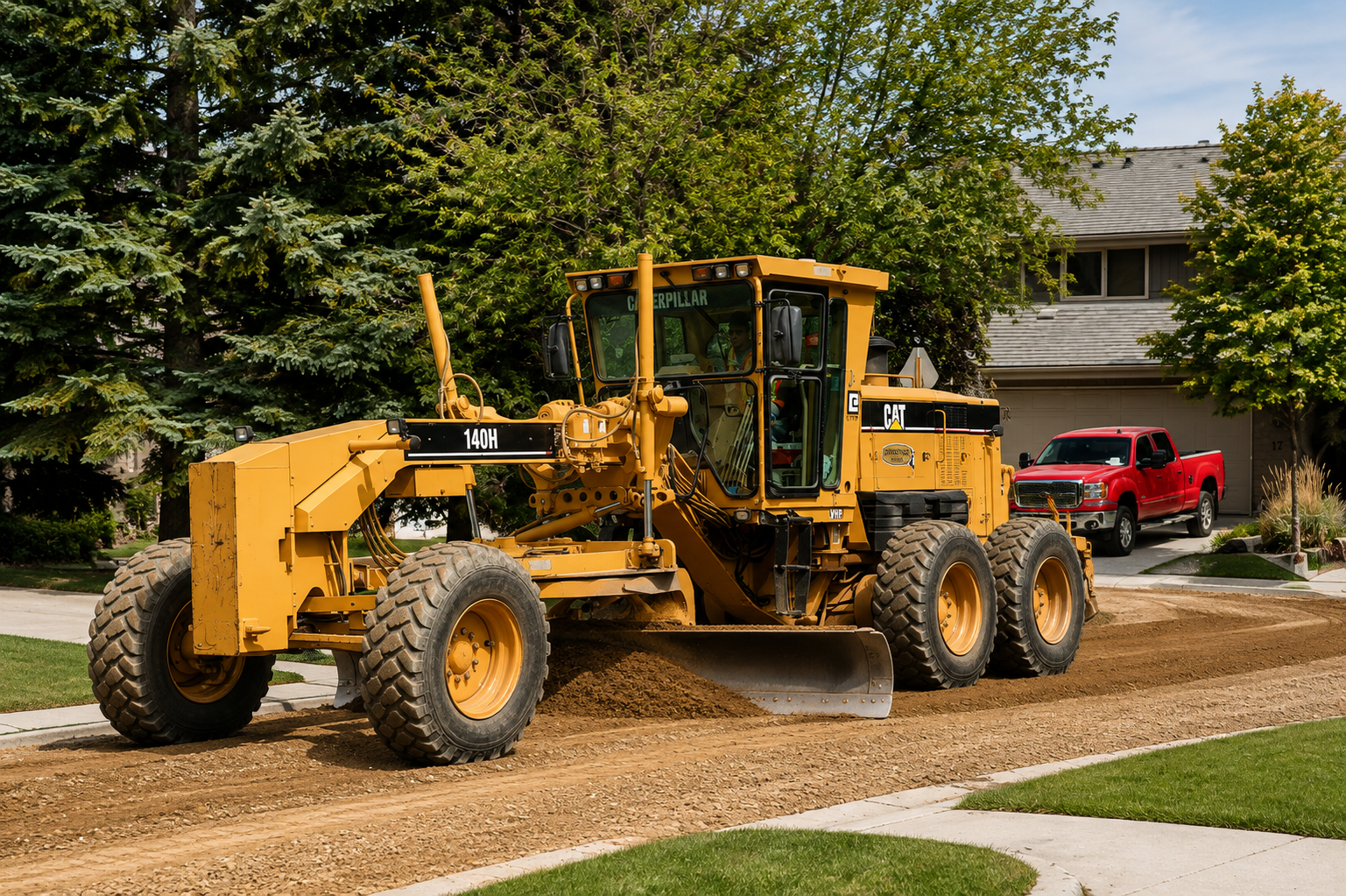
Route selection comes first, following the gentlest workable line between the county road and where you actually park. Vegetation and topsoil are stripped off that corridor, then the cut is opened to full width and depth before rock shows up.
Driveway Subgrade Preparation
Whatever sits beneath the rock decides how long the surface lasts. Soft material gets removed or dried out, exposed native soil is shaped to the finished profile, and the whole corridor is rolled until it stops moving under the machine.
Geotextile Fabric Installation
Woven separation fabric between soil and rock keeps the two from blending. Without it, base slowly disappears into wet subgrade and reappears as ruts, which is why fabric earns its keep on clay, silt, and anywhere water lingers.
Base Rock and Crushed Surfacing Placement
Structural rock goes down in lifts sized to the traffic the drive will carry, each layer compacted before the next arrives. A finer crushed top course locks together under the roller and gives a surface that sheds instead of absorbing.
Crowning and Cross Slope Shaping
Surfaces are built with a deliberate high center or a consistent tilt across the width so water leaves in seconds rather than standing. A flat driveway holds every rainfall it receives, softens from underneath, and starts rutting badly by the following spring.
Culverts, Turnarounds and Parking Aprons
Where the drive meets the county road, a correctly sized and buried pipe carries ditch flow instead of damming it. Widened areas for turning, guest parking, and trailer maneuvering get shaped into the same grading pass while the machines are already there.
Why Proper Grading Improves Driveway Performance
A Surface That Sheds Water Instead of Storing It
Crown and cross slope decide whether rain leaves in seconds or soaks straight down into the base. Drives built to shed hold together through spring runoff and freeze cycles rather than going spongy and rutted every single March and April.
Rock That Stays Where You Paid to Put It
Gravel vanishing quietly into the ground is the most common reason people end up re-rocking a drive every year. Separation fabric over a compacted subgrade keeps that base intact, so the load you bought is still carrying traffic several winters later.
Access That Holds Up in Mud Season
Delivery trucks, propane tankers, and your own vehicle all need to reach the house during the worst weeks of the year. A drive built on compacted base removes the seasonal question of whether that last stretch is passable.
Room to Turn Around Instead of Backing Down a Hill
Backing a trailer down a long grade in the dark gets old quickly. Building a turnaround and an apron into the original layout means guests, deliveries, and equipment all maneuver where there is genuinely room to do it.
A Driveway Emergency Vehicles Can Actually Use
Width, turning radius, and surface strength determine whether a fire engine or ambulance commits to your drive at all. Building those dimensions in from the start protects your household and avoids retrofitting an access road under pressure later on.
Fewer Loads of Gravel Year After Year
Maintenance drops off sharply once the structure underneath is built right. Rather than ordering rock every single spring to fill the same tired soft spots, you drag the surface occasionally and spend that money on something you actually wanted instead.
The First Thing You Drive On Should Be the Last Thing You Worry About
Every visit to your property starts and ends on the driveway, which makes it a strange thing to build cheaply. Gates Brothers Excavation builds new drives around Wenatchee, WA the way the ground and the weather here demand: cut to a workable route, dried and compacted underneath, separated with fabric, rocked in lifts, and crowned so runoff has nowhere to sit. Done that way, it stops being something you think about and simply becomes how you get home in February. If you are planning a build or finally replacing two ruts through the sage, we are happy to walk the route with you. Send the details through our estimate request form.
FAQs - Frequently Asked Questions
How thick does the base rock need to be on a new driveway?
Depth follows the subgrade and the expected loads, so wet clay under heavy truck traffic needs considerably more structure than firm gravelly ground under a passenger car. Testing the subgrade tells you far more than any standard number does.
Is geotextile fabric really necessary under a gravel driveway?
On firm, well-drained native gravel it is genuinely optional. Over silt, clay, or ground that stays wet through spring, fabric is what keeps rock and soil from mixing into a weak layer that ruts and swallows every load added.
What is crowning and why does a driveway need it?
Crowning means shaping the surface higher at the center so water runs off toward both shoulders. Without that shape, rainfall stands on the drive, works down into the base, and softens the exact layer that is carrying your vehicles.
How steep can a new driveway be and still work in winter?
Steeper grades are drivable in summer, but ice changes everything, so the practical ceiling sits well below what an engine can climb. Long pitches benefit from flatter landings, traction surfacing, and drainage that keeps water off the slope.
Can a driveway be built on soft or clay-heavy ground?
Clay and silt are workable, though they change the recipe: digging out the poor material, laying fabric, then building thicker structural rock. Gates Brothers Excavation has done this on Wenatchee, WA lots for 15+ years and prices the extra depth up front.
Do I need a culvert where my driveway meets the road?
Most approaches crossing a roadside ditch do, and the pipe should be sized for the flow that ditch carries during heavy spring runoff. Skipping the culvert dams water back against the road and eventually washes out your entrance completely.
How wide should a new driveway be built?
Wide enough for two vehicles to pass at the pinch points and for a delivery truck to keep all its wheels on rock through the curves. Extra width costs very little during construction and gets expensive to add afterward.
When during a building project should the driveway go in?
Get it roughed in early so construction traffic uses your future drive rather than churning up the yard, then place the finish surfacing once heavy equipment leaves. Gates Brothers Excavation sequences both of those stages around Wenatchee, WA build timelines.