Road Grading & Excavation Services in Wenatchee, WA
Reshape the Road Instead of Rebuilding It
Most bad roads are not worn out; they are the wrong shape. Gates Brothers Excavation handles road grading and excavation across Wenatchee, WA and the wider Wenatchee Valley, including East Wenatchee, WA, Chelan, and Douglas County. Reshaping existing surfaces, cutting into hillsides, widening tight sections, and moving dirt along a route so the road sits where the terrain will support it are all covered here.
Reading ground is the whole job, and after 15+ years moving dirt in this valley we know how cobble, sandy loam, and old orchard soil each behave under a blade. Isaac Gates has owned and operated this outfit since 2017, and he is the one on the machine setting the cut. Expect direct answers, fair pricing, and a site left tidy. Veterans and first responders take 10% off the job. Start with our estimate request form and describe the stretch that needs work.
Road Grading We Handle
Blading and Reshaping Existing Road Surfaces
Loose material gets pulled back from the edges, mixed, and laid back across the travel lane at the right shape. A single pass with the blade set correctly recovers gravel that has migrated into the ditch instead of buying more.
Crown and Cross Slope Restoration
Flat roads hold water; shaped roads move it. Rebuilding a center crown or a consistent cross slope pushes runoff toward the ditch line within feet rather than letting it stand, soak in, and soften everything underneath the surface.
Hillside Cutting and Benching
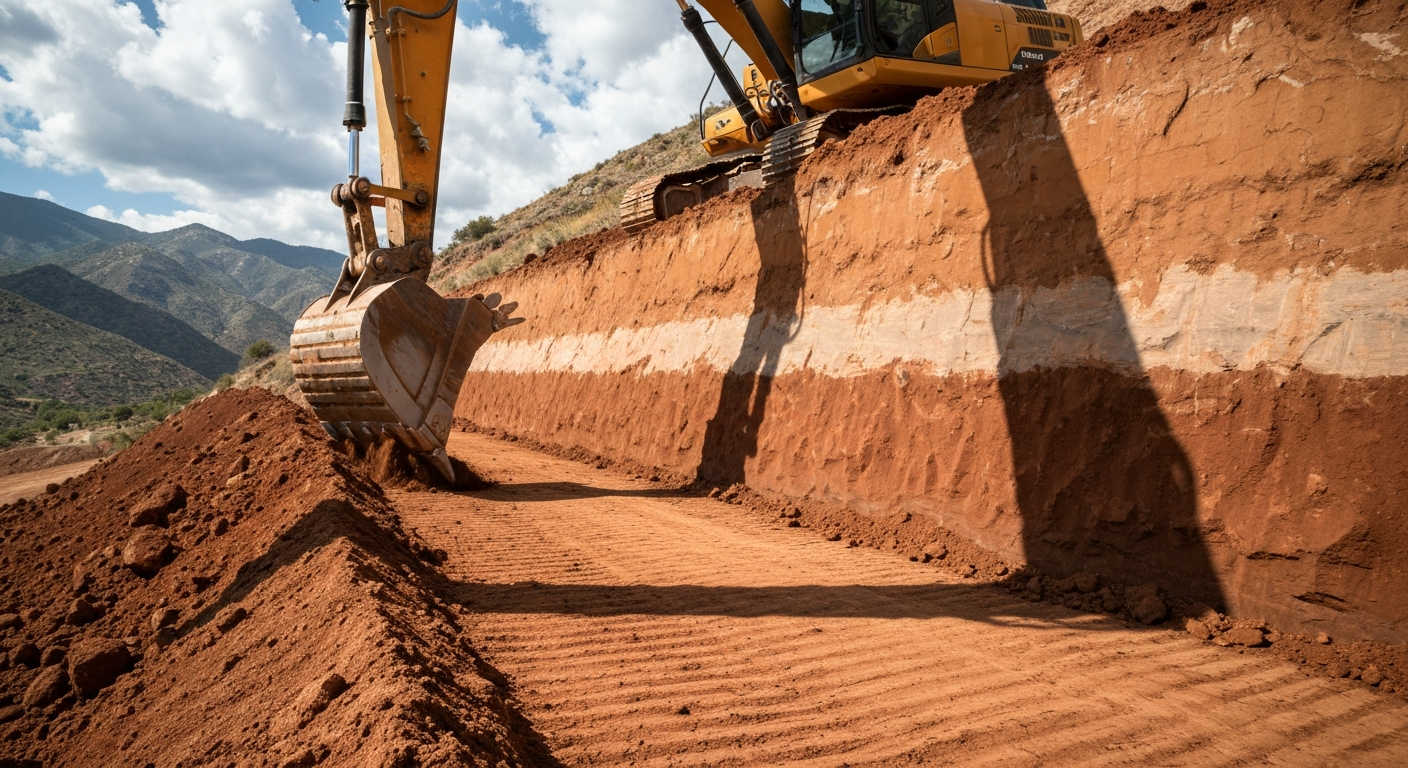
Carving a level shelf into a slope creates the platform a road needs on steep ground. The bucket takes the uphill side down, the material moves to the downhill side, and the bench holds because it sits on undisturbed ground.
Widening Narrow Sections and Corners
Pinch points usually sit where a bank crowds the road or a corner tightens on a grade. Cutting into the uphill bank and rebuilding the shoulder opens those spots without relocating the entire route or disturbing the rest of the alignment.
Cut and Fill Balancing Along the Route
Dirt taken off a high spot has to go somewhere, and the cheapest place is usually the low spot just ahead. Planning cuts and fills together along the length of a road reduces hauling, shortens the job, and keeps material on site.
Stump, Rock, and Ditch Line Excavation
Anything the blade cannot handle comes out with the bucket. Stumps, buried boulders, and slabs of rock get dug free of the alignment, and the ditch alongside gets re-cut to the depth and fall it lost over the years.
How Proper Grading Improves Road Performance
A Surface That Sheds Water By Shape Alone
Correct geometry does work no material can. Once the crown and slope are right, rain and snowmelt leave the driving surface on their own, and the road stops soaking up the moisture that turns it soft every spring.
Smoother Travel Without Buying Material
Much of what a rough road needs is already lying in its ditches and windrows. Reworking that existing gravel back into the driving lane restores ride quality at a fraction of what importing fresh rock would run you.
Less Hauling, Lower Cost
Truckloads that stay on site are money that never leaves the property. Balancing excavated material along the route means fewer trips, less time on the clock, and a smaller bill than a project that imports and exports dirt.
Grades Your Loaded Truck Can Climb
Pitches that beat a full trailer in dry weather become impassable in snow. Recutting the profile to ease the steepest stretches gives everyday vehicles traction to spare and takes the drama out of hauling anything heavy uphill in winter.
The Hillside Stops Sliding Onto the Road
Banks that were never shaped keep dropping soil and rock onto the driving surface. Cutting them back to a stable angle stops the constant cleanup and removes the material that plugs ditches and forces water across the road.
Obstacles Handled Before They Cost You a Tire
Stumps and half-buried rock do more than slow you down; they wreck oil pans, tires, and blades. Pulling them out of the alignment once means the road can be maintained with a blade instead of an excavator.
The Shape of a Road Decides How Long It Lasts
A road that drains, climbs, and passes the way it should rarely needs much else. At Gates Brothers Excavation we spend our days reshaping roads throughout Wenatchee, WA, cutting benches into valley hillsides, restoring crown that traffic has flattened, and pulling rock out of alignments so a blade can do the rest for years afterward. If you are unsure whether your stretch needs shaping or something more, that is worth a conversation before anyone starts moving dirt. Describe the road and what it is doing wrong through our estimate request form, and we will come look at it with you before the season turns.
FAQs - Frequently Asked Questions
What is the difference between grading a road and rebuilding it?
Grading reshapes the material already on the road, while rebuilding replaces the structure underneath it. If the surface holds together but sits flat, rutted, or crooked, reshaping usually solves the problem without importing any new base material at all.
What does crown mean on a gravel road?
Crown is the slight rise down the center that lets water run off both sides instead of pooling. Without it, runoff travels along the wheel tracks, saturates the base, and the surface breaks apart from below over one wet season.
How often does a gravel road need grading?
Once or twice a year suits most roads, usually after spring runoff and again before winter. Gates Brothers Excavation grades roads across Wenatchee, WA on that rhythm, though heavy traffic, steep grades, or a wet spring shorten the interval.
What is benching on a hillside road?
Benching means cutting a flat shelf into the slope so the road sits on solid, undisturbed ground rather than on fill perched over the edge. Benched sections hold their shape far longer on steep terrain than filled ones.
Can a road be widened without rebuilding it?
Usually yes, by cutting into the uphill bank and extending the shoulder outward rather than starting over. The widened portion needs the same compaction as the original section so the new edge does not settle away under traffic.
What does balancing cut and fill mean?
It means using dirt excavated from high points to build up low points along the same route, so material never leaves the property. A balanced job avoids both import costs and disposal, and it usually finishes faster too.
What happens when rock is found in the road alignment?
Smaller rock gets dug out and either buried deep in fill or used as base material. Larger ledges may be broken, worked around by shifting the alignment, or left in place if they sit below the finished grade.
Does grading work better when the ground is damp?
Slightly damp material binds and compacts as the blade lays it down, while bone-dry gravel just rolls. Gates Brothers Excavation times grading around Wenatchee, WA to those windows, and 15+ years in this valley helps us read them.