Private Road Construction Services in Wenatchee, WA
A Road of Your Own to a Place Worth Reaching
The lot is perfect. The problem is getting to it. Gates Brothers Excavation builds private roads and shared driveways for landowners in Wenatchee, WA and the surrounding Wenatchee Valley, including Cashmere, Leavenworth, and Chelan County. Private road construction here means routes serving one home, a handful of neighbors, or a parcel reached only by easement across someone else's ground, along with the approach where that road meets the county road.
Isaac Gates started this operation in 2017 and still runs the machines himself, which means the person you talk about your easement with is the person shaping the road. We bring 15+ years of hands-on excavation work to rural access, keep the conversation clear from first walk to final grade, and leave a tidy site behind. A 10% discount applies for veterans and first responders. Tell us about your property through our estimate request form.
Private Roads We Build
Shared Driveways for Two or More Homes
Splitting a single access between neighbors works when the road is built for the combined traffic rather than one household. We size the running surface, plan passing room, and place the branch points so each home gets a clean turn off.
Easement Roads Across Neighboring Property
Recorded easements come with boundaries, and the road has to stay inside them. Our work follows the described corridor, respects the neighbor's fences, irrigation, and orchard rows, and leaves the ground outside the easement the way we found it.
Fire Apparatus Access and Turnarounds
Rural building permits usually hinge on whether a fire engine can reach the house and turn around. We build the width, surface, and hammerhead or loop turnaround that inspectors look for, so the driveway does not hold up your permit.
Gates, Entrances, and Approach Aprons
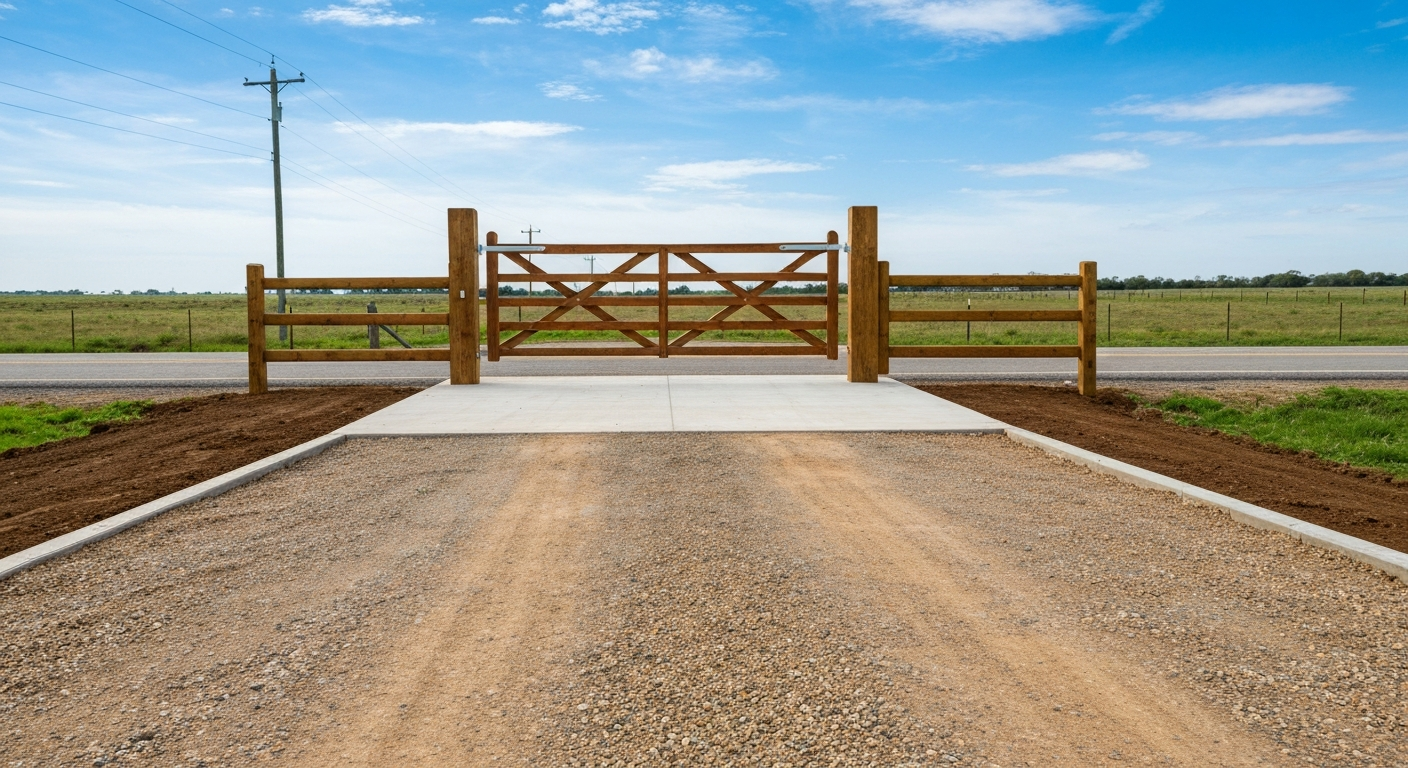
Where your road meets the public one deserves attention. We shape the approach so vehicles leave the county road safely, build an apron that keeps gravel from tracking out, and set the pad and swing room a gate needs.
Switchbacks and Steep Hillside Routes
Climbing a bench above the valley floor rarely happens in a straight line. Laying the route in switchbacks trades distance for a manageable grade, keeps loaded vehicles from spinning, and puts the turns where the slope actually allows them.
Gravel Roads Built to a Budget
Not every access needs to be built like a highway. When the budget is tight, we focus spending where it lasts: drainage, a firm base, and honest compaction, then finish with a gravel surface that can be topped up over time.
Why Proper Construction Creates Better Long-Term Access
An Access Everyone Can Live With
Shared roads work best when the design answers the neighbors' concerns before the first machine arrives. A route that respects boundaries, keeps dust and traffic off doorsteps, and serves every parcel fairly tends to stay peaceful for years.
Your Building Permit Stops Waiting on the Driveway
Access requirements catch plenty of rural owners off guard late in the process. Getting the width, grade, and turnaround right the first time clears one of the conditions standing between your plans and a permit in your hand.
Getting Home in February
Your road is only as good as its worst day. Building for winter mud, spring runoff, and delivery trucks means the propane driver, the school bus stop run, and your own vehicle all still make it up the hill.
Costs That Divide Cleanly Between Owners
Cost splits get complicated when nobody knows what was built or what it covered. A clearly scoped project with an itemized plan gives every owner on the easement something concrete to split, budget for, and refer back to later.
An Entrance That Looks Intentional
The turn off the main road is what visitors, appraisers, and buyers see first. A defined apron, a level gate pad, and clean shoulders signal a property that has been looked after, long before anyone reaches the house.
Remote Ground That Finally Feels Close
Distance stops mattering once the drive stops being a chore. A well-laid route shortens travel time, removes the white-knuckle sections, and makes a back parcel feel like a place you want to be rather than a place you visit.
The Difference Between Owning Land and Reaching It
Land you cannot drive to is land you cannot really use. Gates Brothers Excavation builds private roads and shared driveways around Wenatchee, WA for owners who are done borrowing a neighbor's two-track or nursing a rig up a rutted climb, and we handle the easement conversations, the fire access requirements, and the gravel with the same directness. There is no obligation attached to a conversation, and no pressure to break ground before you are ready. Tell us where the property sits, who else uses the route, and what you are hoping to build, using our estimate request form, and we will take it from there.
FAQs - Frequently Asked Questions
What counts as a private road?
A private road is any route not maintained by the county or city, serving one property or a small group of owners. Responsibility for building it, keeping it passable, and repairing it sits with those owners rather than a public agency.
Does a rural driveway need fire truck access?
Most rural building departments require that emergency apparatus can reach the structure and turn around without backing down the road. That usually shapes minimum width, maximum grade, surface firmness, and a turnaround at the end, so check with your local office early.
How do I build a road across a neighbor's land?
You need a recorded easement giving you the right to cross and to construct, which is a legal document rather than a handshake. Gates Brothers Excavation builds inside those recorded corridors throughout Wenatchee, WA once the agreement is in place.
How wide should a shared driveway be for a few homes?
Households sharing a drive usually need enough width for two vehicles to meet or pass comfortably, which is more than a single-family driveway carries. Grade, curves, and emergency access requirements often push that width higher than owners first expect.
Can a private road be built on a steep hillside?
Steep ground can usually be reached, though the route stops being a straight line. Switchbacks, benched cuts, and extra drainage add length and work, and some slopes force the road onto a gentler side of the property entirely.
Should a private road be gravel or paved?
For most rural access, gravel works well and can be repaired in sections without specialized equipment. Paving makes sense on short, steep approaches where loose material washes away, or where dust near the house becomes a daily nuisance.
What kind of turnaround does a long private road need?
Hammerheads, bulbs, and loops near the house all work, depending on how much flat ground is available. Gates Brothers Excavation shapes turnarounds on hillside and acreage properties around Wenatchee, WA after 15+ years of access work in this valley.
How do gates fit into a private road design?
Every gate needs level ground, room for a vehicle to pull off the county road while it opens, and a surface that will not rut under repeated stopping. Planning that pad during construction avoids rebuilding the entrance later.