Road Construction & Development Services in Wenatchee, WA
Roads Built From the Subgrade Up, Not the Gravel Down
A road is only as strong as the layers buried beneath it. Gates Brothers Excavation builds new roads from raw ground across Wenatchee, WA, handling road construction and development work for subdivisions, acreage projects, and commercial sites in East Wenatchee, WA, Cashmere, and throughout Chelan County. This page walks through how we lay out a route, prepare subgrade, and build a surface that carries traffic.
Isaac Gates founded our operation in 2017 and brings 15+ years of hands-on excavation experience to every alignment we stake. Owner-operated means the owner is on site reading the soil, adjusting lift thickness, and calling the compaction as the work goes. We keep our plans straightforward, our pricing fair, and our job sites clean from the first clearing pass through final surfacing. Veterans and first responders receive 10% off. Send us your project details through our estimate request form to get started.
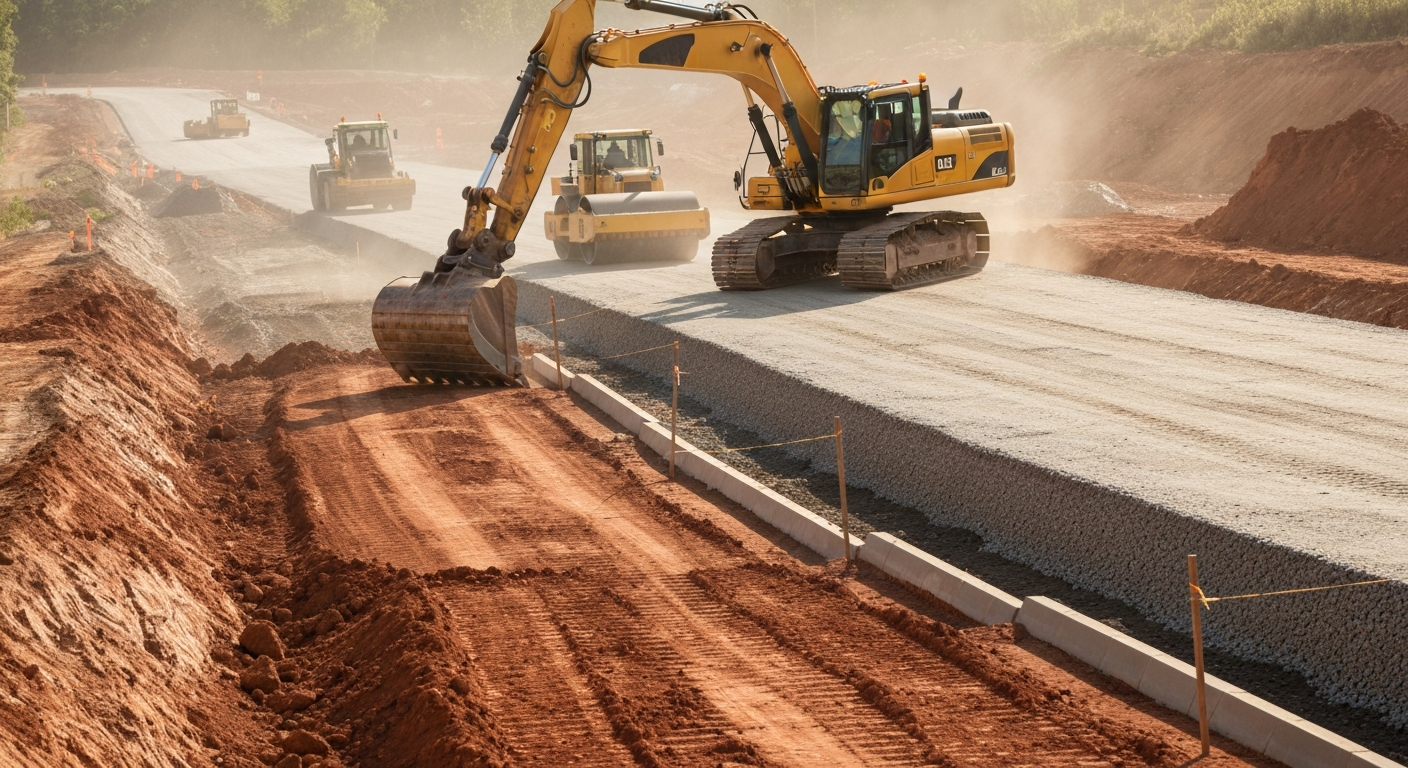
Roads We Build and Develop
Route Layout and Grade Design
Before dirt moves, the route has to make sense. We walk the property, read the contours, and stake an alignment that keeps grades climbable, avoids the worst soils, and reaches the destination without wasting distance or fighting the hillside unnecessarily.
Corridor Clearing and Grubbing
Trees, brush, stumps, and topsoil all come out before any structural material goes down. Organic matter left in place rots and settles, so we strip the corridor to firm native ground and haul or stockpile the debris on site.
Subgrade Preparation and Compaction
Beneath the gravel sits the layer that actually carries the load. We shape the subgrade to grade and cross slope, remove or bridge unstable pockets, then compact until the ground stops flexing under the weight of a loaded machine.
Structural Base Course in Lifts
Depth alone does not build strength. Material goes down in measured lifts, each one spread evenly and compacted before the next is placed, so the finished section behaves as a single bonded mass rather than loose stacked rock.
Ditching and Culvert Placement
Water decides how long a road lasts. Ditch lines get cut alongside the running surface with enough fall to move runoff, and culverts are set at natural drainage crossings with adequate cover and correct inlet and outlet grades.
Subdivision and Development Access Roads
Multi-lot projects need roads that survive the construction phase and still serve residents afterward. We build access for developments with concrete trucks, framing deliveries, and utility crews in mind, then leave a surface ready for daily residential use.
How Proper Roadwork Improves Access and Durability
Weight the Road Can Actually Carry
Loaded gravel trucks, concrete mixers, and lowboys hit a new road hard. A correctly layered section spreads that weight through its layers instead of pumping and rutting, which means the road you paid for survives the project it was built for.
Fewer Delays Once Building Starts
Nothing stalls a build like a truck that cannot reach the pad. Access that goes in first, at full width and full strength, keeps subcontractors on schedule and spares you the cost of towing, rescheduling, and idle crews.
Drainage Built In From the Start
Adding drainage after a road fails costs far more than designing it in. Ditches, crown, and culverts planned alongside the alignment send water off the surface from the first storm, protecting the structural investment buried underneath the finished gravel.
Land That Suddenly Becomes Buildable
Parcels without access are worth a fraction of what the same land brings with a road to it. Opening a route turns landlocked acreage into ground you can build on, subdivide, insure, and finance the way any other property is financed.
Width and Turnouts Sized for Real Traffic
Two vehicles meeting on a narrow grade is a daily frustration and an occasional emergency. Designing width, turnouts, and sight lines into the route from the beginning removes the pinch points before anyone has to back down a hill.
A Base You Can Pave Over Later
Gravel today does not have to mean gravel forever. When the underlying structure is built to carry weight, adding asphalt later becomes a surfacing decision rather than a full reconstruction, so early spending keeps its value as the property develops.
Build the Road First and Everything After Gets Easier
The road is the first thing built on a site and the last thing anyone thinks about until it fails. Gates Brothers Excavation approaches new road construction in Wenatchee, WA as a structure rather than a surface, working from the subgrade upward so the finished route carries loaded traffic through wet springs and dry summers alike. Whether you are opening access to a single homesite or laying out the spine of a development, there is no rush and no pressure to decide today. Send your site details and rough timeline through our estimate request form, and we will walk the ground with you and put together a straightforward plan.
FAQs - Frequently Asked Questions
How deep does the gravel need to be on a new road?
Soil underneath and traffic above set the answer, so a road over firm cobble needs less structure than one crossing soft orchard ground. We evaluate the subgrade first, then set lift thickness to match the conditions we find.
What does clearing and grubbing mean in road construction?
Clearing removes trees and brush above ground while grubbing pulls out roots, stumps, and organic topsoil below it. Skipping the grubbing step leaves material that decays and settles, creating dips in the finished surface within a few seasons.
Why does the subgrade matter more than the surface layer?
Load travels down through the road, so weakness at the bottom shows up as failure at the top. A thick gravel surface over an unprepared subgrade will pump, rut, and separate no matter how much material was placed.
How wide should a new access road be?
Width follows use: a single home needs less than a subdivision serving daily traffic and emergency vehicles. Gates Brothers Excavation sizes roads around Wenatchee, WA to the traffic they will carry, adding turnouts where the terrain limits passing room.
Where do culverts go along a new road?
Culverts belong wherever water naturally crosses the alignment, including draws, seasonal channels, and low points collected by the ditch line. Placement, cover depth, and outlet grade all get established before base material buries the crossing, since digging one back out later is expensive.
Can a gravel road be paved later?
Yes, provided the structure beneath it was built for that load from the start. Paving over a road with an under-built base traps the same weaknesses under asphalt, where they reappear as cracking, potholes, and edge failure within a few winters.
How does rocky ground affect building a new road?
Rock cuts both ways. Solid bedrock makes an excellent foundation but slows excavation and may require breaking, while loose cobble and boulders need sorting so oversized material stays out of the structural lifts and off the finished surface.
What time of year is best for new road construction?
Late spring through fall gives the driest ground and the strongest compaction results. Gates Brothers Excavation has worked 15+ years of seasons in Wenatchee, WA, and frozen or saturated subgrade limits what can be compacted well during deep winter.