Site Development Services in Wenatchee, WA
Turn Raw Acreage Into Ground That Is Ready to Build On
The lot is bought, the house plans are drawn, and the ground is still exactly the way nature left it. Gates Brothers Excavation handles site development for property owners across Wenatchee, WA, including East Wenatchee, WA, Cashmere, and the wider Wenatchee Valley. This page walks through how a raw parcel becomes a staked, shaped, drained building site that a foundation crew can actually work on.
Owner Isaac Gates founded our company in 2017 and still runs the machines himself, backed by 15+ years of hands-on excavation work in Chelan County and Douglas County ground. We sequence every phase in order, keep the site tidy between stages, and tell you plainly when the soil says something the plan did not expect. Veterans and first responders receive 10% off. Send your parcel details through our estimate request form and we will map out the plan and the order it happens in.
Site Development We Handle
Site Layout and Staking
Before a bucket moves, corners get located and hubs get set so the structure lands exactly where the drawings put it. Offsets, elevations, and setback lines are marked clearly enough that every trade arriving later reads the same picture from the same stakes.
Cut and Fill Balance
Soil stripped off high ground rarely needs to leave the property. We calculate how much comes off, where it can be placed, and at what depth, so import and export hauling shrink while the finished elevations still match what the plans require.
Building Pad Construction
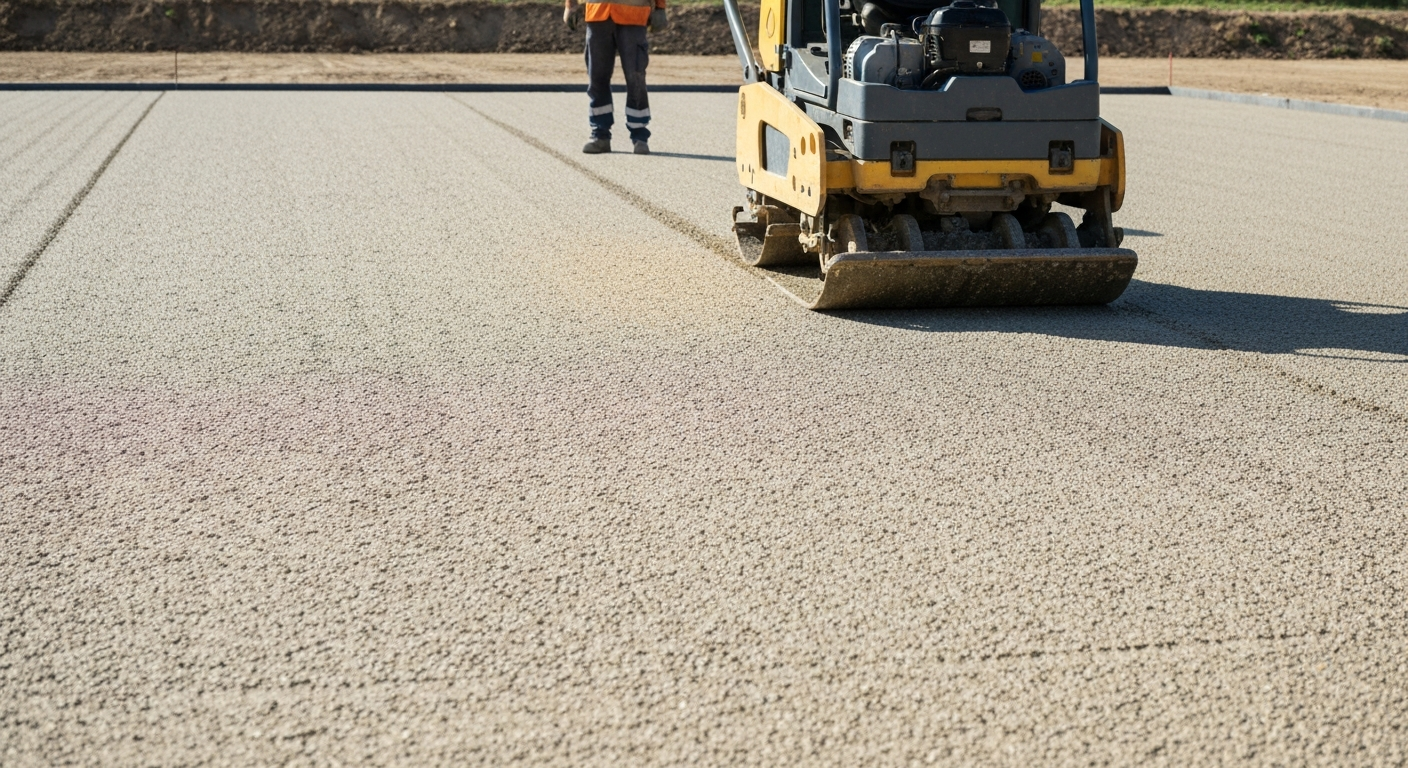
Pads carry the entire structure, so they get built in lifts, moistened, and compacted until the surface holds firm underfoot and stays that way. Oversized rock is screened out and the finished elevation is set to match the foundation plan exactly.
Site Drainage and Erosion Control Planning
Water needs somewhere to go before dirt starts moving. Swales, interceptor ditches, and outfall points are laid out early, then silt fence, straw wattles, and rocked entrances keep sediment on your parcel through the messy middle of construction.
Utility Corridor Rough-In Coordination
Power, water, sewer or septic, and communication lines all want the same ground. We open corridors at the right depth and in the right sequence, schedule around each utility crew, and backfill in a way that protects what was just installed.
Construction Staging and Site Access
Deliveries, concrete trucks, and framing crews all need somewhere to park, turn, and stack material safely. Temporary roads, laydown areas, and turnarounds go in early so nobody churns your future lawn into ruts while hauling lumber during a wet framing week.
How Site Preparation Simplifies Construction
The Whole Sequence Runs Off One Plan
Handing clearing, earthwork, drainage, and utility corridors to a single crew removes the gaps where projects stall. One schedule covers the phases, one person answers for the ground, and the trades behind you arrive to a site that is genuinely ready.
Fewer Costly Surprises at Foundation Time
Soft spots, buried stumps, and hidden rock cost far less to find now than after forms are set. Discovering them during earthwork keeps your concrete crew moving and protects the budget you set aside for the house itself.
Soil Balanced On Site Instead of Trucked Away
Every load leaving your property costs money twice, once to dig and once to haul. Reusing cut material as structural fill trims trucking, shortens the schedule, and spares neighboring roads a steady parade of dump trucks all summer.
A Pad Your Concrete Contractor Can Trust
Foundations behave when what sits under them is uniform and dense. Arriving to a pad that holds elevation, drains away from the footprint, and has working room around it saves your builder rework and saves you change orders.
Runoff Handled Before It Becomes a Problem
Spring melt and summer cloudbursts both find low ground fast. Shaping a site so water leaves on a planned path protects new landscaping, keeps the driveway from washing out, and spares you chasing repairs through the first wet season.
A Schedule Your Other Trades Can Plan Around
Framers, plumbers, and concrete crews book weeks ahead and lose money sitting idle. Knowing when the pad, corridors, and access will genuinely be finished lets you lock those dates in with confidence instead of shuffling every subcontractor on the job twice.
Ground Ready for the Next Crew, Not Just the Next Rain
A finished building site is really a handoff. Everything Gates Brothers Excavation does on raw ground around Wenatchee, WA aims at one moment: your concrete contractor steps out of the truck and finds nothing to argue with, because elevations are true, the pad is dense, water is routed, corridors are open, and the access is wide enough for the delivery. Getting there takes sequencing more than speed, and it takes an owner on the machine who has watched what this valley does to work that gets rushed. There is no pressure to schedule before your plans settle. When you want to talk through your parcel, send the details through our estimate request form.
FAQs - Frequently Asked Questions
What does site development include on a piece of raw land?
Everything between bare ground and a buildable site: layout and staking, clearing, cut and fill earthwork, pad construction, drainage shaping, utility corridors, access roads, and erosion control. The exact list depends on the parcel and what you intend to build.
How do I know whether my parcel needs cut and fill work?
Almost any lot with noticeable slope across the building footprint does. Level ground gets created by moving material from the high side to the low side, and the steeper the grade, the more earthwork the finished pad requires.
Should site development happen before or after the house is designed?
Ideally alongside it. Knowing where soil is stable, where water travels, and how shallow the rock sits often changes the footprint or the finished floor elevation, and those adjustments cost far less on paper than in the field
What is the difference between site development and site preparation?
Site preparation usually means the immediate work around a building footprint, such as clearing and pad construction. Development covers the whole parcel, including access, drainage, utility corridors, and staging, so the property functions as a unit once construction ends.
How does rocky or cobbly ground change a site development plan?
Cobble slows trenching and limits how material can be reused, since large rock makes poor structural fill. Gates Brothers Excavation has worked this soil for 15+ years around Wenatchee, WA, so screening, bedding, and haul volumes get planned early.
When should utilities be roughed in during site work?
After rough grading sets the finished elevations, but before pads and access roads receive their surfacing. Trenching through a completed driveway or a compacted pad means tearing up finished work and paying to rebuild it a second time.
Can site development move forward during winter?
Frozen and saturated ground limits compaction and makes fill unreliable, so heavy earthwork usually pauses. Clearing, layout, rock work, and some trenching still progress, and planning through the cold months puts you at the front of the spring line.
How is erosion controlled while a site is under construction?
Exposed soil gets protected with silt fence, straw wattles, temporary seeding, and rocked entrances, while runoff is intercepted before it gains speed. Gates Brothers Excavation maintains those measures on every Wenatchee, WA site until permanent ground cover takes hold.