Trenching Services in Wenatchee, WA
Straight Trenches, Held to Depth, Backfilled So They Stay Put
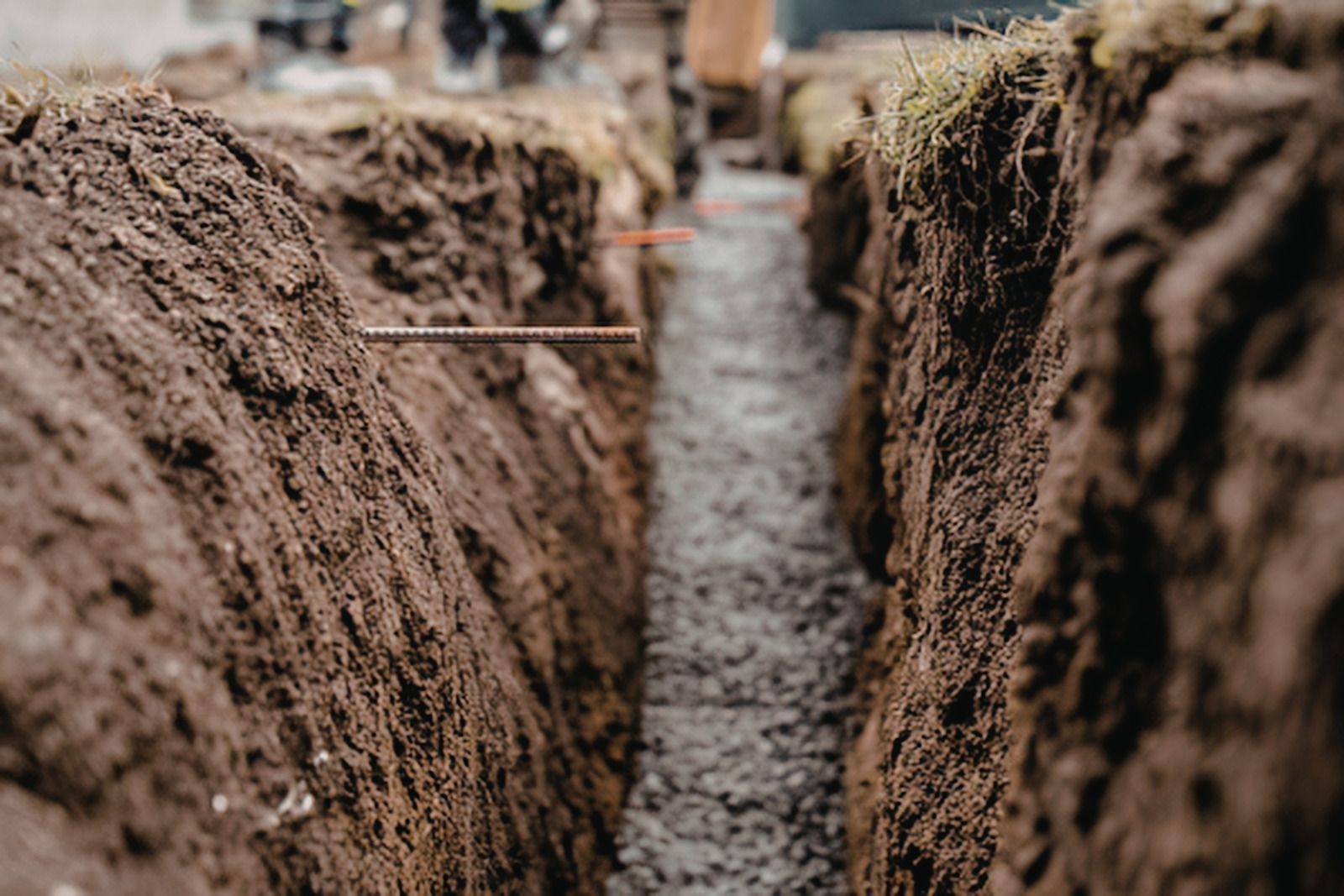
Trenching looks simple right up until a wall sloughs or the ground sinks a year later. Gates Brothers Excavation provides trenching services in Wenatchee, WA and throughout East Wenatchee, WA, Chelan and Douglas County. This page covers the trench itself: controlling depth and width, placing bedding, keeping walls safe, managing spoil, backfilling in compacted lifts, and locating what is already buried before a bucket ever touches the surface.
Isaac Gates has been cutting trenches through valley cobble, orchard ground, and rocky hillside since 2017, backed by 15+ years of digging, and he operates rather than supervises, which is how lines get placed at the right grade the first time. Every trench is planned around what it will carry, how deep it must sit, and how the surface will be restored afterward. Veterans and first responders receive 10% off. Tell us what you need trenched using our estimate request form.
Trenches We Dig
Depth and Width Control
Grade is checked continuously as the trench advances, because a bottom that wanders costs slope and a trench cut wider than necessary costs backfill. Consistent dimensions keep material quantities predictable and give whatever goes in the trench uniform support.
Trench Bedding Placement
Sand or fine gravel is placed and leveled beneath the line to cushion it against rock and distribute load evenly. Bedding depth follows what is being installed, and the layer is shaped rather than dumped so nothing rests on a point.
Shoring and Safe Trench Walls
Deep cuts get sloped, benched, or supported with a trench box depending on soil conditions and depth. Access ladders, spoil setbacks, and daily inspection of the walls come standard, since collapsing soil moves faster than anyone can climb out.
Utility Locating Before Digging
Every job starts with locate requests and marked ground, then private lines like irrigation mains, propane, septic laterals, and unrecorded electrical get traced or hand exposed. Potholing at crossings confirms actual depth instead of trusting a paint mark on the surface.
Backfill and Compaction in Lifts
Material returns to the trench in measured layers, each compacted before the next is added. Lift thickness matches the equipment being used, which prevents the loose pockets that later show up as a sunken line across a driveway or lawn.
Footing Drain, Irrigation, and Conduit Trenches
Narrow runs for perimeter drains, sprinkler mains, sleeving, and electrical conduit demand precise fall across long distances. Small trenchers and compact excavators reach between structures and established landscaping without tearing up more ground than the line itself actually needs.
How Proper Trenching Protects Buried Utilities
Trench Walls That Stay Standing
Soil collapse is the fastest way for a routine dig to turn serious. Sloping, benching, or boxing the trench according to conditions protects the people working inside it and keeps the excavation open until the installation is genuinely finished.
Ground That Does Not Settle Later
A trench backfilled in one quick dump settles for years, leaving soft depressions across lawns, gravel, and pavement. Compacting in lifts forces that settlement out during construction instead of leaving it to appear after everything above has been restored.
Buried Lines Left Untouched
Striking a gas main, fiber run, or irrigation feed turns a half-day job into an emergency with an audience. Locating and hand exposing crossings beforehand avoids the outage, the repair bill, and the awkward conversation with the utility.
Material Piled Where It Belongs
Spoil dumped against the trench edge loads the wall and blocks the work. Setting piles back and staging them along the route keeps walls stable, keeps the corridor walkable, and makes backfilling faster when the line is ready.
A Trench Bottom Ready to Receive the Line
Sharp rock points, soft spots, and uneven grade damage pipe and conduit before anything is even buried. Preparing a smooth, bedded, consistently sloped bottom protects the whole installation from stress that would otherwise show up as a failure years later.
Surfaces You Can Use Again Right Away
Lawns, driveways, and parking areas cut by a trench should return to service quickly. Proper compaction and clean restoration mean the scar closes up instead of lingering as a rutted stripe everyone drives around for the next season.
Lines Buried Right Are Lines You Never Think About Again
A trench is judged years after it is covered, by whether the ground above it stayed level and whatever runs through it kept working. Gates Brothers Excavation cuts trenches across Wenatchee, WA with that horizon in mind, holding grade through the dig, protecting the walls while crews are inside them, and rebuilding the ground in compacted layers so nothing sinks once the season turns. Run by the owner and straightforward about what your soil will allow, we would rather explain the approach up front than surprise you halfway through. When your project needs a trench cut accurately and closed properly, outline the run and depth through our estimate request form.
FAQs - Frequently Asked Questions
How is trench depth kept consistent while digging?
Depth is checked with a laser level, grade rod, or machine control as the trench advances, and the bottom is trimmed rather than overdug. Consistent depth matters most where the line requires a specific fall across its run.
Why does a trench need bedding material?
Bedding cushions pipe or conduit against rock and hard clumps and spreads the load of backfill evenly along the line. Without it, a single stone under a pipe becomes a pressure point that eventually cracks or deforms it.
When does a trench require shoring or sloping?
Wall stability and cut depth decide it, and anything beyond a shallow trench in ground that will not stand on its own needs protection. Options include laying the walls back, benching them in steps, or setting a trench box into the excavation.
How far back should spoil be placed from the edge?
Piles sit well back from the lip so their weight does not surcharge the trench wall and trigger a collapse. Keeping the edge clear also leaves a safe walking path along the excavation and room for equipment to pass.
What does backfilling in lifts mean?
Backfill is returned in shallow layers and compacted individually rather than pushed in all at once. Gates Brothers Excavation backfills Wenatchee, WA trenches this way because 15+ years here proves a single dumped fill keeps settling for years afterward.
How are existing lines found before trenching?
Utility locating services mark buried public infrastructure, and private lines are traced, probed, or hand dug until they are confirmed. Potholing at every crossing verifies actual depth, since surface marks show horizontal position but say nothing about vertical.
How wide should a trench be?
Width follows what goes inside, with enough clearance beside it to place bedding and compact the backfill. Gates Brothers Excavation keeps Wenatchee, WA trenches only as wide as the work requires, since extra width adds spoil, backfill, and time.
What causes a trench to settle after backfilling?
Loose material, lifts placed far too thick, or backfill compacted at the wrong moisture content all leave voids that quietly consolidate over time. Frozen chunks and organic debris mixed into the fill produce exactly the same slow sinking effect.